Saturday, March 23, 2024

What to get growing in your spring edible garden!

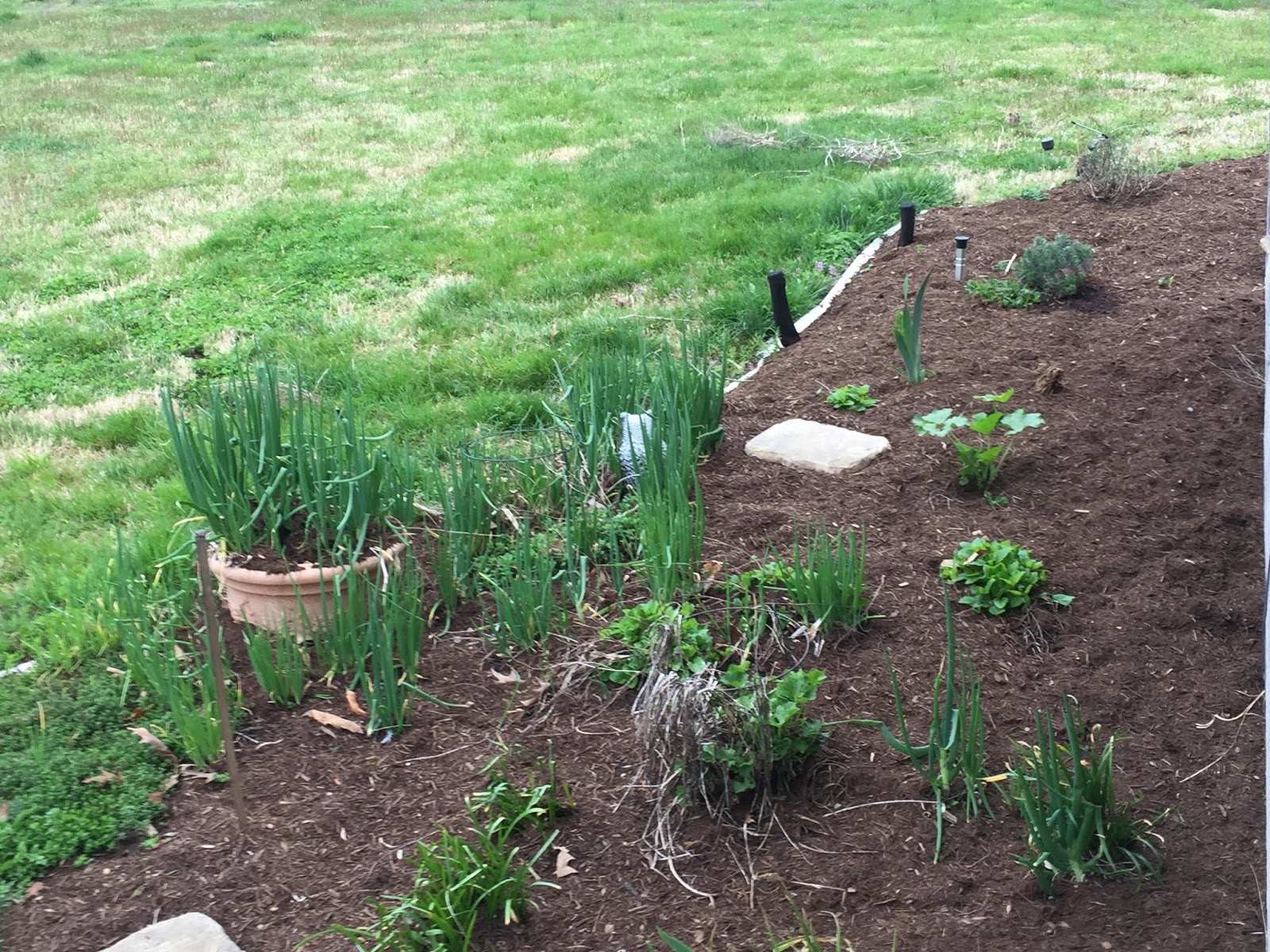
Garden bed ready for outdoor sowing
Saturday, March 23, 2024
If indoor seed starting is not your thing, but you still want to have the variety and cost effectiveness of seeds, you can direct sow your seeds directly into the garden.  Now is the time to get the cool season loving crops growing.  

If you are planting in mulch, be sure to open a hole in the mulch, plant the seed to the depth on the seed packet and cover with potting soil.  Mulch can form a hard crust that only the strongest seedling (like beans and squash) can break through.

I would prepare the beds first with fertilizer and mulch before starting seeds.  You can do a soil test yourself or send off for one if you want to create a fertilizer specific to your needs.   See this post for details The next step in garden production and your nutrition-soil minerals  If this is over the top for you, just use a good organic fertilizer at the recommended rate, an inch of compost, and cover with mulch.  You want to make sure your fertilizer is covered or you will lose a good portion of the nitrogen to the atmosphere.  I love gardening in mulch for many reasons that you can read about here:  Weed free, self fertilizing, till free garden beds

Here is what can be sown in our  Zone 7a garden this month.  There are so many early and late varieties available that you should consult the seed packet on the best outdoor sowing times (always listed as the weeks before your last frost date Frost date look up) as you may be able to sow the seeds even sooner outdoors than has been typical in the past.

You can plant either in a garden bed or pot.  Lately, I have really liked sowing seeds in a pot I leave on the deck so I can keep them moist and watch them more closely.  I also like to start cold season crops like lettuce and spinach super early in a pot under a portable greenhouse.  This gives a quick start to growing.  When the seedlings have sprouted and have at least a second set of leaves, I transplant into the garden bed or long term pot.  Outdoor seed starting tips

You can also practice succession planting which means planting a few seeds of the same crop every 2-3 weeks so that you get a continuous harvest, like lettuce and spinach.  Want continuous harvests? Succession planting!  Another option is to plant early, mid or late types of the same veggie all at the same time so you have them ready for harvest for a longer period of time.

Seeds you can sow right now outdoors
Arugula
Asparagus
Beets
Broccoli
Cabbage
Carrots
Chamomile
Chives
Collards
Cress
Fava beans
Fruit trees and bushes
Garlic
Grapes
Kale
Kohlrabi
Leek
Lettuce (sow every 2 weeks if you are a salad lover for continuous salads)
Mache (corn salad)
Mustard
Onion
Parsnips
Peas
Potatoes
Rhubarb
Shallots
Spinach (sow every 2 weeks through early May)
Turnips

It is officially spring garden season!

Sunday, March 17, 2024

Veggie plants have arrived in stores!

Transplanted spinach and lettuce
Sunday, March 17, 2024

For those that don't have a lot of time, are just getting started in gardening or just want a jump on harvests, transplants have arrived at the big box stores!  I start seeds and buy transplants every year.  This time of year, I usually purchase spinach plants and lettuces.  

There were many herbs, broccoli, cauliflower, cabbage, spinach, lettuce, and even tomato plants in the outdoor nursery racks Thursday in our area.  There should be many more edibles coming in the next couple of weeks.  The transplants you buy should already be hardened off and ready to plant in the garden.  

Check with local nurseries for a better variety.  They also can answer any questions you have and recommend the plants that are a good fit for your garden.

Inside the stores are racks of seeds, barefoot edibles and flowers, onion sets, shallot sets, and potato sets.  You can buy asparagus, all kinds of berry bushes and fruiting vines bare root.  Be sure to get any bare root plants into soil as soon as you can.  You can put them in a pot until your garden is ready for them.

I already had snow peas, spinach, Dragon's Tail radish, chard, and parsley up from sowing seeds.  I have several lettuces up too from seed.  I bought three 6 packs of lettuce-red romaine, green romaine and buttercrunch from the store.  I'll transplant them outdoors next week so I get lettuce at harvestable size a couple weeks sooner than my lettuce seedlings will give me.  

We have a hard freeze in the forecast for Monday so I'll wait until after the freeze to plant.  Lettuce can survive temps down to 28F or lower, but I will be separating plants that are in the same pod so I will be damaging their roots, making them weaker for a bit.

When I buy transplants, I look for ones that have more than one in each pocket of the 6 pack.  If you separate them gently, you can get more plants for the money.  Do separate them and plant them at the spacing recommended on the plant tag so they will grow to full size.

It's time to get planting! 

Saturday, March 16, 2024

Quick Tip 15-sharpen tools, buy needed tools

 Saturday, March 16, 2024

Winter can be a downer time of year for those of us that love to garden, but it doesn't have to be!  There are many "gardener" things you can do during the cold months of the year.  I'm going to share an idea each week for the rest of the winter on gardening activities that help satisfy the itch and prepare us better for the upcoming spring season.  Here we go with Winter Quick Tip 14-sharpen tools, buy needed tools 


Last week you organized your gardening supplies and tools.  You now have all your tools together in an easy to find and see location.  This week take a close look at the tools you have and their condition.  Repair, clean, sharpen, remove rust, and protect the tools that need it.  Sharpening shears, cutters, and hoes can make tasks much easier when you need to use them.  Protect them with a food grade oil against future rust.  Any vegetable or plant oil falls into this category like jojoba oil or linseed oil.


Take a look at your tools to see if any need to be replaced.  Options to replace are to ask friends if they have any extras and do an exchange, around here Facebook Marketplace is used a lot, eBay is another option, and there are other sites for purchasing used tools.  Of course, the seed catalogs that we get have lots of tools that may address an unmet need for maintaining the garden.


With all the tools you need in good working order, you are ready to start gardening!


Sunday, March 10, 2024

What to plant in the March edible garden

March garden bed, ready for planting
Sunday, March 10, 2024

March and April are prime time for cold season crops like greens, cabbage, kale, broccoli, Brussels sprouts, carrots, beets, radishes and cauliflower.  In March, you can direct sow (plant seeds in an outdoor pot or your garden bed), start seeds indoors or transplant plants that you have bought locally or raised indoors.

Big box stores have had their seeds on display for over a month now.  In our area, plants begin arriving soon in stores or you can order transplants online.  The variety available in big box stores continues to expand as more and more of us are growing our own food.  If you are wanting something unique, try on line seed companies. Some of my favorites with a good selection of organic vegetables, garden fruits, and herbs-Abundant Life Seeds, Baker Creek Heirloom Seeds, High Mowing Seeds, Johnny's Selected Seeds, Renee's Garden, Seeds of Change, Territorial Seed Company, Seeds from Italy, Botanical Interest.  Many have plants as well as seeds.  

If you are not sure what to plant, here are some ideas on figuring that out.  How to know what to grow

Using indoor seed starting is a great way to accelerate your harvest by up to two months.  Seed packets tell you how far in advance of your last frost date to start your seeds indoors or when to plant outdoors for "direct sowing" in the garden.  Just look on the back. Here is a web page to look up your last frost date: Farmers Almanac frost dates

Cold season crops include your greens, broccoli, cabbage, carrots, radishes, turnips, beets, cauliflower, strawberries and peas.  For more on spring gardens, see  A spring edible garden   Starting these varieties in a portable greenhouse will give you a jump on harvest time.  I like starting seeds in my portable greenhouse and once they get to a good, sturdy size, thinning and transplanting out to the garden bed.  I have sowed many varieties last month and this month outdoors.  Spinach, snow peas, Dragon's Tail radish, parsley and cultivated dandelions have sprouted so far.  

March and April is also the time for warm season veggie and herbs to get their indoor start.  Summer veggies include beans, tomatoes, corn, melons, basil, eggplant, peppers, okra and squash.  Summer veggies go into the garden after chance of frost has passed and the soil has warmed.  In our area, it is the first of May for the soil to warm.  You don't really get an advantage in planting the summer veggies early because they don't grow until the ground warms up.  I just imagine them sitting in the dirt with their roots and stems shivering.  See this blog on summer veggies for more info.  A summer edible garden

Seeds to start in garden bed or transplant outdoors for our Zone 7a garden
Arugula
Asparagus
Beets
Broccoli
Cabbage
Cauliflower
Catnip
Celeriac
Celery
Chard
Chervil
Chives
Cilantro
Collards
Corn salad
Endive 
Escarole
Fennel
Fenu
Horseradish
Kale
Kohlrabi
Leek
Lettuce
Mache
Mint
Mizuna
Mustard
Onions
Pak choi
Parsley
Parsnips
Peas
Potatoes
Raddichio
Radishes
Rhubarb
Salsify
Scallions
Shallots
Sorrel
Spinach
Strawberries
Summer savory
Turnips

Start seeds indoors
Artichokes and cardoons
Basil
Bay
Bee balm
Cauliflower
Chamomile
Comfrey
Dill
Eggplant
Edamame
Fennel
Kohlrabi
Lavender
Lemon verbena
Lovage
Marjoram
Okra
Oregano
Peppers
Rosemary
Sage
Tarragon
Tomatoes
Thyme
Seedlings started in an Aerogarden hydroponic system
You can find more crops seed starting times in this blog  Indoor sowing/outdoor planting dates

Another trick is to do succession seed starting.  For continuous harvests of veggies like broccoli, spinach and lettuce, start new seedlings every 3 weeks and plant out every three weeks in the garden.  Keep the harvest going, do succession planting  For the early seedlings, use varieties that are described as cold hardy.  When you get to April, start seedlings that are heat tolerant.  Heat tolerant varieties will resist bolting and bitterness as summer temperatures rise.  Keep salads going all summer long

You can also start perennial flowers and veggies indoors as well.  For any plant, look at the seed packet for when to plant outdoors according to your frost date.  Then back up the time from there on when to start indoors.  Typical seed starting is 6-8 weeks prior to the plant out date.  For more on perennial fruits and veggie gardens, Perennial veggies in the Midwest garden

For tips on seed starting: 

Trying to decide what to plant for this year's garden?  Here are some garden ideas:

Don't be worried about the work of putting in an edible garden bed.  You can simply grow veggies in your existing mulched beds right along with your flowers in the ground or pots!  Weed free, self fertilizing, till free garden beds

Saturday, March 9, 2024

Quick Tip 14-organize your gardening supplies

Saturday, March 9, 2024

Winter can be a downer time of year for those of us that love to garden, but it doesn't have to be!  There are many "gardener" things you can do during the cold months of the year.  I'm going to share an idea each week for the rest of the winter on gardening activities that help satisfy the itch and prepare us better for the upcoming spring season.  Here we go with Winter Quick Tip 14-organize your gardening supplies and tools. 


Whether big or small, now is a great time to organize your gardening supplies and tools.  Sort through your supplies and organize them by type with the oldest in front so they are used first.  Putting like things together now before you need them will be a time saver when the gardening season is here.  Use small bins to keep like items together on shelves.  Makes it easy to just pull out and look through to find exactly what you need.  I always buy clear bins so I can easily see into them.  Labels with contents are helpful, too.


Take stock of what you have and make a list of anything you need for the spring garden.  This gives you time to shop around for what you want and find the best value.


Go through your seed catalogs for pages you folded back on gardening supplies or tools you wanted to try this season.  If you still think it is a good idea, get it ordered!


Take a look at your tools, including trellises and supports.  Make sure you have enough to cover what you are planning for this year's garden.  For tools, clean, sharpen and protect them from rust.  For trellises and supports like tomato cages, sanitize them so they are ready to use.  You definitely don't want to bring any disease from last year to this year's garden!


Now you are ready to start the gardening season at full speed, and supplies.

Sunday, March 3, 2024

March 2024 Edible Garden Planner

March garden with lettuce and spinach
Sunday, March 3, 2024

Feels like spring is here in our area with above normal temperatures.  Daffodils and crocus has been blooming for a couple weeks.  Forsythia and Bradford pear tree buds are are beginning to open, daylilies and iris flowers greenery is poking their heads up.  

If you have not already, it is time to test your soil, get your garden beds ready for planting, finalize the plan for your spring garden and get planting! 

Soil Testing and Bed Preparation
Now is the time to clean up your beds and determine what your soil needs to feed and support your plants through the coming growing seasons.  Remove all the dead plant material still left from last season.  If you had any disease problem, do not compost.  I always leave anything with seed heads through the winter for the birds then remove what remains this time of year.  

You can take a soil sample to our local county co-op extension office to have it tested or buy a do it yourself kit at any big box store or local nursery.  You can do a more extensive soil test by sending your soil sample off.  Here is a link to my blog on soil nutrition:  The next step in garden production and your nutrit...  Well-fed plants grow better and are more nutritious for you, too.  A win-win.

If you don’t want to go to the trouble of testing, a sure way to enrich your soil is to use a balanced organic fertilizer and compost.  I add organic material every spring with a layer of compost, then fertilizer and top with hardwood mulch in the garden beds, building the soil’s fertility and its ability to hold water.  This is also when I use amendments to adjust pH if needed.  I did a soil test last fall and my soil has a pH of 7.8 which is more alkaline than herbs and vegetables do well at so I am going to add sulfur this spring to bring it down.  Optimal range is 6.5-7.0, so slightly acidic.

A local CSA farmer and organic gardener told me years ago that it is important to not let your fertilizer just lay on top of the ground as many of the nutrients will be lost, especially nitrogen.  My spring routine to build the soil is always to put down an organic fertilizer like Espoma or ReVita Pro, then a layer of compost and top with mulch.  Nitrogen oxidizes easily with the air so be sure to cover your fertilizer with soil, compost or mulch every time you fertilize.  You can make your own balanced fertilizer, too, which is pretty inexpensive  Make your own all natural, complete fertilizer

If this is your first time gardening, it is super easy to buy plants and put in pots or plant in your established flower beds with your flowers.  I do 100% of my edible gardening in pots and my flower beds.    Easy kitchen garden  How to know what to grow  Surprising veggies that can be grown in pots  If you are really nervous, the easiest garden to start with are herbs.  They love to be neglected!  Just plant them and watch them grow.  My first edible garden was herbs.  Most herbs are perennials so you plant them once and they come back every year.  Start a kitchen herb garden!

Finalize your garden plan
Before your start planting, take pen to paper and finalize your spring garden plan.  Every fall, I capture what went well for the growing season, what I want to learn more about over the winter, and a plan for the coming season.  You will forget if you don't write it down.  A garden journal is a great tool for gardening.

The big box stores have out their seed and plant racks so they should have transplants soon.  Seeds are already stocked every place I've been.  Transplants are a good and easy way to look for what will grow well in your area.  The types that like cold weather that will be out soon are cabbage, broccoli, spinach, lettuce, leeks, onion sets, potato sets, blueberry, raspberry, and blackberry bare root plants.  Spring edible garden
Mid March garden
The greens I will plant in our mini greenhouse to keep them warmer and encourage growth so we get fresh salads as soon as possible.  They will do just fine in the garden bed too.  I just love spring salads!

Some varieties I enjoy growing in the spring garden:  
Oakleaf Lettuce-ready to harvest in 45 days  Everything you need to know about growing lettuce
Wild Garden Kales-ready to harvest in 30 days Grow one of the super greens this year-kale
Mesclun Valentine Lettuce mix (red tinted lettuce and greens)-ready to harvest in 30-55 days
Marvel of Four Seasons Butterhead Lettuce (I love the sweet taste of butterheads)-ready to harvest in 55 days Everything you need to know about growing lettuce
Red Sails Lettuce (a ruffled red and green, stays sweet even after bolting)-ready to harvest in 45 days
Space Hybrid Spinach-ready to harvest in 38 days  Grow spinach-a super nutritious, easy green
Gourmet Blend Lettuce (Prizeleaf, Royal Oak Leaf, Salad Bowl, Ashley)-ready to harvest in 45 days
Sugar snap peas-ready to harvest in 70 days Time to plant peas!
All kinds of broccoli or cauliflower-ready to harvest in 50-80 days (leaves are great in salads) Broccoli and cauliflower growing tips
Cabbage-ready to harvest in 68 days.  Cabbage is nutritious and easy to grow
Carrots-ready to harvest in 50-75 days  Grow crunchy, colorful carrots practically year round
Parsley-70 days to harvest  
Potatoes-ready to begin harvest in 70 days  Time to plant potatoes, even if you only have a patio

The above can be companion planted with radishes, beets, chives, garlic, and onions.  Since they are shallow rooted, they grow well with root crops.  Get the most from your space-plant intensively!

When I plant, I plant with a handful of worm compost and water in with fish emulsion.  Germination should take anywhere from 4-15 days, depending on how warm the soil is.  I am out in the garden looking for little green shoots daily!  Decorative container gardening for edibles

Important tip-if planting seeds in a mulched bed, be sure to cover the seed with only soil; most seedlings are too weak to push through mulch.  Mulching your beds keeps the weeds from sprouting, too.  Weed free, self fertilizing, till free garden beds 
Potato box
Zone 6/7 Spring Garden Roadmap

Planting seedlings outdoors:
Now (or as soon as the soil can be worked)-fruit trees and vines, nut trees, asparagus, garlic, leeks, onions, peas
Mid-March-cabbage, kale, lettuce, mustards, spinach
Beginning of April-broccoli, cauliflower, cilantro, more lettuce, lemon balm, parsley
Mid-April-corn, marigolds, rosemary, sage, thyme
First of May-basil, chives, cucumbers, peppers, tomatoes
Mid-May-cantaloupe, eggplant, okra, squash, watermelon

Starting your seeds outdoors**:
Now (or as soon as the soil can be worked): peas, spinach, lettuce, radish, mustards
Mid-March: all the above plus arugula, bok choy, cabbage, carrot, collards, leeks, mache, onion. rhubarb, cultivated dandelions
End March:  all the above plus fava beans, beets, broccoli, carrot, Chinese cabbage, cress, kale, kohlrabi, leek, mizuna, parsley, parsnip, early potatoes, turnip

**One watch out is planting seeds too soon.  Seeds have to have a certain soil temperature to sprout.  Plant too soon and the seed will rot and not sprout.  Here are some soil temp guidelines.  Temps to plant seeds outdoors  Be sure to harden off your seedlings before planting outdoors if started inside  "Hardening off" seedlings

Starting your seeds indoors for summer planting:
Now-lemon balm, parsley, sage, thyme, lettuce, cress, chard
Mid-March-basil, broccoli, cabbage, cauliflower, okra, marigolds, eggplant
End of March-cantaloupe, cucumber, lettuce, peppers, tomatoes

These dates are just guidelines.  You can start your seedlings later and plant your transplants later as well.  Be sure to read the seed packet for what you are starting.  They make all kinds of varieties that are cold hardy and can be planted sooner than what I outlined above.  If you get a cold snap, there are things you can do to protect your early crops.  Extend the season with protection for plants

I bought a pop up walk in greenhouse in the fall so I am starting my seeds a couple weeks earlier and will put them out in the greenhouse when they get their first set of true leaves to get a jump on spring planting.  This is my first year using it so I am sure I will make mistakes, but that is a fun part of gardening-learning and adapting.

Happy gardening!

Saturday, March 2, 2024

Quick tip 13-start seeds indoors

Seeds sprouting in Aerogarden on kitchen counter

Saturday, March 2, 2024

Winter can be a downer time of year for those of us that love to garden, but it doesn't have to be!  There are many "gardener" things you can do during the cold months of the year.  I'm going to share an idea each week for the rest of the winter on gardening activities that help satisfy the itch and prepare us better for the upcoming spring season.  Here we go with Winter Quick Tip 13-start seeds indoors. 


Starting plants from seeds can be a real cost saver over buying transplants in the store.  It also accelerates how quickly you can begin harvesting in the spring.  Another big benefit of using seeds versus buying plants is that you get to try lots of unusual varieties you can't get in the store or your neighborhood nursery.  If you save seeds and use them for your next garden, you are getting free plants and using seeds adapted to your garden conditions.


This time of year, you can start seeds indoors and outdoors.  Outdoors I have started lettuce, spinach and snow pea seeds.  My spinach and snow peas are up.  My Red Sails lettuce has not yet sprouted.


Indoors, I have started many seeds in my Aerogarden seed starting tray.  Aerogarden is the brand name of a countertop hydroponic system that comes with built in grow lights.  I have had it for years.  It has a 95% germination rate.  I can start 70 seeds at a time in it.  The pods are not cheap.  Park Seeds has a system that is similar to Aerogarden and the pods are much more reasonable.  I am trying them with this batch of seeds.  The pods are larger so I had to cut down the edges for them to fit.  So far, the seed germination is doing great.


There are many low cost options for starting seeds as well using seed starting mix.  You can use plastic bottles, toilet paper cores, paper towel cores or newspaper as your starting pots.  You can re-use any plastic pots you get from purchased plants.  Or can purchase a Jiffy seed starting kit at a big box store.  Just about every on-line seed company seeds a seed starting system.  Lots of options!


For my seed starting, I am trying to stick with my 2024 Garden Plan I decided on in the fall  Reflections on the 2023 edible garden and plans for 2024 and finalized in January  My 2024 Edible Garden Plan  Every fall, I write down what worked well and how many of each veggie I will need the following year based on the garden's latest performance.  Then, I fine tune it in January and order any seeds that I may need, or decide I can't live without because they look so good in the seed catalog!


Here are the first set of seeds I started indoors this past week end:

Tomatoes-1 Big Rainbow, 1 Indigo Pear Drops, 1 Brandywine from saved seed, 1 Pink Brandywine, 1 Red Brandywine, 2 Cherokee Purple, 1 Chocolate Pear, and 1 Red October Hybrid

Basil-4 Cardinal, 1 Blue Spice.  Will plant in next round Genovese

Ornamentals-1 Pulmonaria, 1 Eucalyptus, 1 Mountain Mint

Lettuce-1 Red Sails, 1 Lunix, 1 Solar Flare, 1 Bronze Beauty, 1 Yedikule, 1 Royal Oak Leaf

Salad greens-1 Chinese Pink Celery, 1 Hilton Cabbage, 1 Barese Swiss Chard, 1 Japanese Mountain Spinach Swiss Chard, 1 Chijimisai Greens, 1 Oyster Leaf, 1 Molten Fire Amaranth, 1 Pink Beauty Amaranth, 1 Big Leaf Tong Ho, 3 Aurora Mixed Orach

Herbs-1 Chervil, 1 Rosemary, 1 Bouquet Dill, 1 Flat Leaf Parsley, 1 Curled Parsley, 1 Broadleaf Sage, 1 Red Shiso, 1 Orangelo Thyme, 1 Lemon Savory, 1 Winter Savory, 1 Slo Bolt Cilantro, 1 Dwarf Cilantro, 1 Salad Burnet 

Peppers-1 Chocolate Sweet Pepper, 1 Tunisian Baklouti, 2 Ancho

Eggplant-1 AO Daimaru, 1 Amadeo


More than half of the seeds are already sprouted.  When they get their second set of leaves (what they call their first "true" leaves), I will transplant them into pots.  Depending on what the outdoor temperatures are at the time, I will either keep them indoors under grow lights until it warms up so more or put outside in our walk in, pop up greenhouse.  After danger of frost has passed, I'll plant the summer lovers out in the garden bed or pots.


The bigger seeded summer edibles, I'll start in small pots in mid-March like squash, okra and melons.  Beans I always direct sow in their final spot in the garden.  I have grown them in pots or the garden bed.