Sunday, January 19, 2020

Surprising veggies that can be grown in pots

Zucchini and petunias in a pot
Sunday, January 19, 2020

There are so many new varieties out every year.  There are ones that are more resistant to disease.  Ones that have higher nutritional value.  Ones that produce more.  Ones that have improved taste.  Ones that are developed for their small size and big harvests for those of us who have limited space or just want to get more for the effort.  It is amazing what can now be grown in pots!

We hear a lot about Monsanto and GMO’s (genetically modified organisms) and crop breeding can seem a bad thing.  The difference between GMO’s and other types of crop breeding is that GMO’s bring in genetic material from other organisms in a lab, like bacteria and even viruses.  The plants are engineered so that they kill insects that try to eat it.

That is only one side of the plant breeding story.  There are many other natural, with a little help, breeding of crops today.  It can be as simple as saving of seeds from the best producer of last year.  There are also hybrids which take the best traits of two different parents into seeds.  These hybrids will not produce seed that you can reuse next year and get the same vegetable as the parent.

Heirlooms and open pollinated vegetables will produce “true” to seed.  The offspring will be like its parent.  What do the terms GMO, natural, heirloom, organic, hybrid really mean?

Through the centuries, farmers have chosen the traits they like and have built on them from season to season.  This has given us Brandywine tomatoes, Vidalia onions and JalapeƱo peppers.  Yum!

Today there is much interest in urban and small space gardening.  There are many new varieties every year.  Here are some I have run across that I had not expected:
Watermelon-Bush Sugar Baby, Sugar Pot
Basil-Summerlong 
Basil basics-harvesting, preserving, growing basil
Blueberry-Top Hat
Bush Bean-Any, Pole Bean-Any with stake in pot 
Growing beans
Cantaloupe-Honey Rock, Minnesota Midget
Corn-On Deck Sweet Corn
Cabbage-45 Day Golden Cross, Parel, Caraflex 
Cabbage is nutritious and easy to grow
Cilantro-Calypso is one of the most heat tolerant
Corn-On Deck Hybrid
Cucumbers-Bush Champion, Spacemaster, Salad Bush, Miniature White, Picklebush, Mexican Sour Gherkin, Patio Snacker  
How to grow cucumbers-in pots or in the garden
Eggplant-Patio Baby, Black Beauty 
Eggplant-add this native from India to your garden
Kale-Dwarf Blue Curled Vates
Grow one of the super greens this year-kale
Parsley-Single Italian, Extra Curled dwarf
Peas-Easy Peasy, Half Pint, Any bush types
Time to plant peas!
Pepper-Any, hot peppers thrive in pots
Peppers are for every taste and garden
Tomatoes-BushSteak, Patio Princess, Bush Early Girl, Tumbler, Bush Big Boy, Baxter’s Bush Cherry, Lizzano, Sweetheart of the Patio, Tumbling Tom Yellow, Bush Better Bush, Balcony, Fresh Salsa Hybrid (look for bush/patio/container types)
Tomatoes 101, everything you need to know to grow great tomatoes
Carrots-Caracas, Short ‘n Sweet, Little Finger, Tonda di Parigi, Parisian, Thumbelina, Touchon, Parmex, Mignon (look for short types)
All you need to know about growing carrots
Radish-Cherry Belle
Easy to grow crispy, peppery radishes
Zucchini-Bush Baby, Yellow Crookneck, Eight Ball, Cue Ball, Golden Delight, Anton, Patio Star, Giambo, Astia, Raven, Patio Star, Cosmos Hybrid (look for bush types versus vining types)
Growing zucchini and summer squash
Decorative container gardening for edibles

This is just a few of the many compact varieties available today to grow in small spaces and containers.  Just look for terms like "compact", "dwarf", "container" in the descriptors.  Many on line seed companies also have a section dedicated to container varieties.

Sunday, January 12, 2020

Seed catalogs in full swing

Sunday, January 12, 2020

It is that time of year as the winter wind is blowing (or tornadoes this year) and the dreary days seem endless; the time to dream of warm weather, spring breezes, and green things sprouting once again.  Can't you almost smell the fresh cut grass and turned earth?  

Every gardener looks forward to the new year’s bounty of seed catalogs.  You can spend long hours browsing the possibilities for the coming season, imagining what you want to plant where.  What looks interesting to try this year, to reminisce on what worked well last year.
The biggest challenge is controlling the urge to go a little wild on the seed and plant ordering!  Every fall, I did as I always do, make myself a list of what I want to grow the following spring and summer.  If I could only just stick to it.............

The definitions used in seed catalogs can be a little confusing.  Organic means the plant it was taken from was grown using only natural inputs and is certified to be organically grown.  Hybrid is a plant that has been bred to have characteristics that are helpful like being resistant to different diseases.  These are not ones you want to grow if you want to save seed because the plants grown from the seed saved from it will not grow up like the mother plant.  OP means open pollinated.  Organic and OP are types you want to buy if you think you may want to save the seed to use next season.  Heirlooms are plants that have been in a family for generations.  They are all OP.  They may or may not also have been grown organically.  What do the terms GMO, natural, heirloom, organic, hybrid really mean?
Vintage WW2 poster
For seed catalogues, the best to order from are those that do their trials in your region of the country.  The seeds and plants they carry are the ones that have performed the best for them in their trial gardens.  Two of my favorites to order from are Baker Creek Heirloom Baker Creek Heirloom and Territorial Seed Company Territorial Seed.  I love Baker Creek because they specialize heirlooms and rare seeds from around the world.  It is just fun!  Territorial Seeds has a good summary in each section of growing tips.  

Catalogs I love are the ones with the links are on the right.  I have ordered from them all and been happy with their selection and how well the plants did.  They are all reputable seed companies that have a good selection of organic and heirlooms.

If you are a beginner, start with the a kitchen herb garden Start a kitchen herb garden! and a tomato plant or two Tomatoes 101, everything you need to know to grow great tomatoes.  

The biggest mistake new gardeners make is starting with too much and it becomes overwhelming instead of relaxing and fun.  If you have a small space or just want a small garden, here are some tips  How to decide what to plant for small spaces?

When do edibles start growing again?


Sunday, January 12, 2020

If you have noticed that plants stop growing in the winter, whether indoors or out, you would be right.  It is not just the temperatures that affect this slow down.  It is the amount of sunlight.

Basically, plants go dormant when receiving less than 10 hours of daylight.  For my latitude, this is from November 22-January 19.  You can look on this site to see when your daylight hits 10 hours.  daylight calendar

When planting in the fall for winter crops, you need to plan that they are at full, harvestable size by November 22nd.  They will remain this size until the end of January, when they begin regrowing.  edible winter garden

Growth starts back up at the end of January, for indoor and outdoor plants.  The lettuce, chard, sorrel, cabbage, kale, celery, and herbs that have overwintered will start growing with vigor again after this time with clear days and warmer temperatures.  Start your edible spring garden now

You can scatter sow seeds now of cold hardy crops and they will be primed for the longer days.  It is surprising to see the little greens popping their heads out in February.  

End of January is also when you start indoor seeds for a jump on spring and summer harvests.  January is indoor seed starting time! Here is a s...

The force of life is amazing!

Sunday, January 5, 2020

Growing corn


Sunday, January 5, 2020

Scientists believe corn was developed about 10,000 years ago in central Mexico.  It was called maize and still is today.  Maize spread throughout the Americas 2500 years ago.  Native Americans were growing maize well before European colonists arrived.  Original plants produced one small seed head per plant.  By the time European immigrants arrived, maize had the larger ears we are familiar with today and many varieties and colors.

There are about 3 different of edible corn-sweet corn, ornamental Indian corn that can be used ornamentally, as popcorn or ground into corn flour, and dent corn which is used to feed animals and make the corn meal you get in grocery stores.  Corn plants grow to 6-7 feet tall and produce 2 ears per plant in 10-12 weeks.  They are considered a warm season crop and are sown by seed in mid spring.  Plant 2-3 weeks apart and you can get a harvest from midsummer to early fall.

Corn cross pollinates with other corn varieties so planting one type is best or separate different varieties by 250 feet.  Otherwise, you will get corn heads that are a combo of the parents.  Plant in soil that is fertile and at least 60 degrees Fahrenheit, 1-2" deep, in full sun.  Fertilize at planting, at 8" tall and again when the plants are 18" tall.  Since corn grows so tall, it needs lots of nutrition.

Days to harvest varies by cultivars.  For sweet corn, it can be as quick as 62 days to as long as 105 days.  For popping and flour corn, it is between 75 to 120 days.

Harvest sweet corn the ears when the silks turn brown and dries up.  A kernel should spurt milky juice when ripe.  If not eating immediately, store in the refrigerator with the husks intact.  For popcorn, harvest after the stalks turn brown.  Pull husks down or off and hang dry until completely dry.

Sweet corn starts turning its sugars to starch the moment it is picked.  The sweetest corn is the one that is picked and thrown directly into the pot for cooking!

Saturday, January 4, 2020

Growing sweet potatoes

Flowering sweet potato vine
Saturday, January 4, 2020

Sweet potatoes are part of the morning glory family, which is clear when you see the flowers of the vine.  Sweet potatoes are native to the tropical regions of the Americas and have been around at least 5,000 years old.  They were first cultivated in Central or South America.  They are a different family than yams which are native to Africa, Asia and the Americas.

Sweet potatoes were grown by the early American colonists and referred to as a food of the Native Americans.  The edible tuber varieties have different skin colors-yellow, orange, red, brown, purple and beige and different flesh colors-white, beige, red, pink, violet, yellow, orange and purple.

Sweet potatoes are a great source of fiber, vitamin B6, potassium, vitamin A, vitamin C and manganese.  sweet potato nutritional info
Sweet potato vines filled out on mounds
As a tropical vine, it requires warm soil and a long growing season to develop the edible tubers, 100-140 days.  They are started indoors and planted outdoors once night time temperatures are in the 60's.  You can start your own plants by covering sweet potatoes in 2" of sand in a container kept 70-80 degrees Fahrenheit, keeping the soil moist.  As the slips appear, cover with another inch of sand.  In 6 weeks, the slips will be 6-8" long and ready to plant in the garden.

Sweet potatoes like loose soil that is well composted but not overly fertile.  Soils high in nitrogen will create healthy vines and few, small tubers.  Mounding the soil 8" high will help warm the soil.  Leave 3-4 feet between ridges as sweet potato vines are rambunctious!  Plant slips at least a foot apart.  Water immediately.  The vines are pretty hardy.  Water during any times of drought.  About a month before frost, cease watering. 

The tubers should be ready to be harvested when the leaves turn yellow or as soon as the first light frost. Do harvest before any hard frosts are forecasted.  Be careful harvesting the tubers to not damage them.  Cure for 10 days at 80-85 degrees Fahrenheit and high humidity for taste and keeping longevity.

Sunday, December 29, 2019

January 2020 Edible Garden Planner

It's seed catalog season!

Sunday, December 29, 2019

January is the time of dreaming and planning for your spring garden.  All the seed companies begin sending out their catalogs for seeds and plants in December and January.   It is an exciting time for browsing the magazines and making the garden plan for the upcoming year!

Grow what you love!
The easiest way to fall in love with gardening is growing what you love to eat.  There is nothing like strolling out to the garden to see what's ripe and tasty for dinner.  If you have ever wanted to plant a kitchen garden, but weren’t sure if you had the space, you may be surprised.   

It is common for Italians and French to have a small kitchen garden where they grow herbs, greens and vegetables year round.  It is amazing the amount of food you can grow in a very small space!  How to decide what to plant for small spaces?


If you have only a 6’ x 6’ space, a Mediterranean kitchen garden could include the following:
Herbs (1 each)-thyme, rosemary, sage, oregano, and flat leaf parsley 
3 basil plants (for pesto and seasoning)  
2 tomatoes-1 small fruiting and 1 slicer type 
2 sweet pepper plants  
1 zucchini (look for “bush” types as they are more compact)  
1 eggplant 
8 red bunching onions 
8 garlic plants 
Arugula, spinach and lettuce scatter sowed  

For more details on a compact French garden:  Small space French kitchen garden
For an Italian garden:  Heirloom Sicilian kitchen garden  To entice the little ones, an Italian garden can also be called a "Pizza or Spaghetti Garden"!  Pizza garden for the kids

If you also have room for pots on the patio, you could grow the zucchini, eggplant, and cucumber in pots  (only 1 plant in each pot) and add 3 bush or 6 pole bean plants in the garden bed.  Traditional bush beans would be lentils, Romano, Capitano, Cannellini, fava; pole beans-Roma, Helda, Supermarconi.  Personally, I would stick with the beans you eat whole as shelled beans you do not get as much food per plant, and less food per space in the garden.

If you have more room, you can add almonds (yes, they survive Midwest winters), beets, chard, fennel, chickpeas, figs (grows well in a pot), asparagus, cardoon, chicories, radicchio, endives, broccoli, cauliflower, or annual artichokes.  A word of caution, don't go overboard the first year!

If you are just beginning a garden, do start small.  You want the garden to be fun and relaxing, not overwhelming.  Don't be afraid to begin.  The force of life is strong and really doesn't need much from us.  Buy a few plants in the early spring and just put them in the ground with a natural fertilizer and you will be amazed at how they just go to town all by themselves!
Vintage WW2 poster
For seed catalogues, the best to order from are those that do their trials in your region of the country.  The seeds and plants they carry are the ones that have performed the best for them in their trial gardens.  Baker Creek is fun because they specialize heirlooms and rare seeds from around the world.  Territorial Seeds has a good summary in each section of growing tips.

Catalogs I love are the ones that the links are on the right.  I have ordered from them all and been happy with their selection and how well the plants did.

Still having trouble deciding?  Well, you have some time before the season starts.  Heck, you can procrastinate all the way to June..........  It is not too late to start a garden in June!  You can use this time to make your plan based on what you eat this winter.  Use this winter to figure out what to grow in the ...

Saturday, December 28, 2019

Growing fennel


Saturday, December 28, 2019

Fennel dates back to Roman times.  Pliny (23-79 AD) wrote about it.  He believed serpents ate and slithered up against the aromatic herb because it improved their eyesight after shedding their skins.  He used the herb to treat 22 ailments.  Fennel was a staple in royal households in the 1300's and came with the Puritans to America.  Fennel was used as an appetite suppressor, to stave off evil spirits, its tea a treatment for weight loss, insect repellant, an antidote for poisons and mad dog bites.  The list goes on!

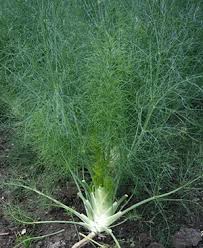
Fennel is grown like and resembles dill.  It has a licorice taste.  All parts of the plant is edible.  Fennel grows a large bulb at the base of its stem that is eaten as a vegetable, very popular in Italian cooking.  The tops are used to flavor dishes.  The seeds are used in seasonings and its oil extracted to used for its fragrance in soaps and perfumes and to add an anise flavoring to food, candies and liquors.  It is a very versatile plant!

Cultivated fennel grows to about 3' tall like dill, with long stems and lacy foliage.  Their flowers are tiny yellow clusters.  There are green and bronze varieties.  The bronze fennel is a striking plant.  Adds a bold accent to the garden.
Pic from davesgarden.com of bronze fennel
Like dill, it can be direct sown in the garden in mid-spring, 1/8" deep, 1-2" apart and thinned to a spacing of 6" after sprouting.  Can be sown 2-5 weeks before the last average frost date, but after danger of a hard freeze (28 degrees F) is over.  Plant in fertile soil, well amended with organic matter, and keep well watered for the biggest and sweetest bulbs.  It takes 7-10 days for the seeds to sprout.  I sometimes see fennel plants in big box stores and local nurseries.

Harvest when the bulb is about the size of a tennis ball.  Cut leaves 2" above the bulb.  You can dry the seeds and foliage to use as seasoning.  Depending on the variety, fennel is ready to harvest in 75-100 days from when the seed is sown.  Bulbs can reach 1 pound in weight and 1' tall.
Fennel flowers
You can eat either raw or cooked.  It has a sweet, anise type flavor.  To me, it has a licorice taste.  It is very common to use the leaves and seeds for season fish.